How do stablecoins maintain their value if they’re not backed by anything tangible?
Great question — and here’s the thing: stablecoins ARE backed by something tangible. That’s literally how they maintain their value. Let me clear up the misconception.
The Core Mechanism: Backing & Reserves
Stablecoins maintain their $1 peg (or whatever their target value is) through collateral reserves — real assets held in custody that back every token in circulation. This is the opposite of being “backed by nothing.”
Here’s how it works:
Fiat-Backed Stablecoins (Most Common)
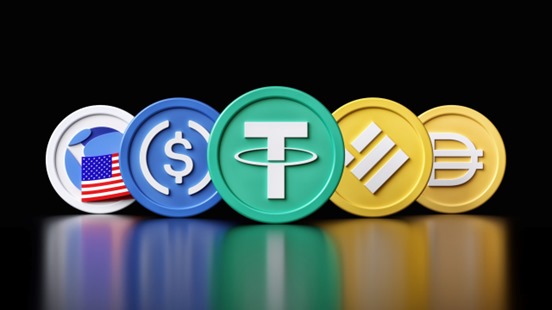
The most popular stablecoins like $USDC and $USDT are backed by actual US dollars and dollar-equivalent assets held in bank accounts and money market funds.
How it works:
- You send $1 USD to the stablecoin issuer (like Circle for USDC or Tether for USDT)
- They deposit that dollar in a bank or money market fund
- They mint 1 USDC/USDT token and send it to you
- If you want to redeem, you burn the token and get your $1 back
The issuer maintains a 1:1 reserve ratio — for every token in circulation, there’s $1 in reserves. This is audited and reported regularly. For example, [Circle publishes monthly attestations] showing USDC’s backing.
Why this works: The value is literally backed by fiat currency. You can always redeem your stablecoin for the underlying dollar, so there’s no reason for the price to deviate from $1.

Collateral-Backed Stablecoins (Crypto-Native)
Some stablecoins like $DAI use crypto collateral instead of fiat. Users deposit crypto (like ETH) into a smart contract, which mints DAI tokens.
How it works:
- You lock $1,500 worth of ETH into a vault
- The protocol mints 1,000 DAI (overcollateralized at 150%)
- Your DAI is backed by that ETH collateral
- If ETH price drops, you need to add more collateral or your position gets liquidated
Why this works: The collateral is locked on-chain and verifiable. If DAI trades below $1, arbitrageurs can profit by buying DAI cheap and redeeming it for $1 worth of collateral, which pushes the price back to $1.
The Trust Layer: Why Backing Matters
Here’s where it gets interesting. Stablecoins maintain value through a combination of backing + redemption mechanisms + regulatory oversight:
| Factor | How It Maintains Value |
| Reserve Backing | Every token has collateral behind it; you can always redeem |
| Redemption Rights | Users can convert stablecoins back to underlying assets at par value |
| Regulatory Oversight | Governments (like Singapore and Canada) are now requiring [robust reserve asset backing and reliable redemption mechanisms] |
| Market Arbitrage | If price deviates from $1, traders profit by buying/selling, which corrects the peg |
| Transparency | Issuers publish reserve attestations so users know the backing is real |
Recent regulatory push: Singapore’s Monetary Authority and Canada’s government are both mandating that stablecoin issuers maintain sufficient reserves and establish redemption mechanisms — essentially codifying what responsible issuers already do.
Here’s where it gets real. Stablecoins can lose their peg if:
- Reserves are insufficient or fraudulent — If an issuer claims $1B in reserves but only has $500M, the stablecoin is essentially a Ponzi scheme. This happened with Terra’s UST, which had no real backing.
- Redemption is blocked — If you can’t actually redeem your stablecoin for the underlying asset, the backing is worthless. This happened during bank runs on stablecoin issuers.
- Collateral becomes illiquid — If a collateral-backed stablecoin is backed by illiquid assets that can’t be quickly converted to cash, redemptions fail.
- Issuer insolvency — If the company holding the reserves goes bankrupt, your stablecoin is at risk.
How do I verify that a stablecoin actually has the reserves it claims?
1. Third-Party Audits & Attestation Reports
This is your first line of defense. Major stablecoins use independent accounting firms to verify reserves:

点击图片可查看完整电子表格
Why this matters:
pymnts.com showed $181.2B in assets vs. $174.4B in liabilities—a $6.8B cushion. That’s real money backing the token. However, attestations are snapshots in time , not continuous monitoring. They’re like a financial photo—useful, but not a live feed.
2. Real-Time Transparency Portals
Some issuers now offer live dashboards:
USDC’s Transparency Portal shows:
- Current USDC in circulation: $75.85B
- Reserves: $75.85B (matching exactly)
- Daily BlackRock reporting on reserve fund composition
- Weekly mint/burn flow disclosures
This is the gold standard for centralized stablecoins. You can literally check it right now and see the backing in real-time.
Tether is moving toward this too — that they’re pursuing a full audit with a Big Four firm, signaling a shift toward greater transparency.

3. On-Chain Verification (For Decentralized Stablecoins)
For DAI and other decentralized stablecoins, you don’t need to trust anyone—you can verify directly on-chain:
- MakerDAO Governance Dashboard : Shows total DAI supply, collateral types, and system-wide collateralization ratios in real-time
- Oasis.app : User-friendly interface to check individual Vault health and collateral ratios
- DeFi Saver : Automation tools that let you monitor and adjust collateral positions
The beauty here? The code is open-source, the blockchain is immutable, and you can audit it yourself if you’re technical enough.
Here’s what should make you nervous:

点击图片可查看完整电子表格
5. The Deeper Dive: What to Actually Read
When you pull up an attestation report, focus on:
- Reserve Composition : What’s backing the stablecoin? Cash? Treasuries? Crypto? (Treasuries = safer; crypto = riskier)
- Excess Reserves : Is there a cushion above the circulating supply?
- pymnts.com is a good sign.
- Auditor Independence : Is the firm independent, or do they have conflicts of interest?
- Scope Limitations : Does the audit cover everything, or just certain assets?
6. The Honest Truth About Limitations
Even with all this transparency, there are gaps:
- Attestations are periodic , not real-time. A lot can change between reports.
- Auditors can only verify what they’re shown . If an issuer lies about what’s in their bank account, the auditor can’t catch it (though this would be fraud).
- Market value risk : Even if reserves exist, if they’re in illiquid assets or bonds, a sudden market shock could create problems.
- Regulatory risk : Governments could freeze assets or change rules overnight.

Stablecoins aren’t backed by “nothing” — they’re backed by real assets. The key difference from speculative cryptocurrencies is that stablecoins have a redemption mechanism : you can always convert your token back to the underlying collateral at a fixed price.
This is why $USDC (backed by US dollars and T-bills) is more stable than $DAI (backed by volatile crypto), which is more stable than $UST (which had no real backing and collapsed).

The stablecoin market is now worth $299.68B globally , and regulators are tightening requirements around reserve backing — which actually strengthens the model by forcing transparency and accountability.
If you want to learn more about cryptocurrency-related questions, click Minara AI—it can answer any questions you have about cryptocurrency!