Ask a room full of pizza obsessives whether stone or steel is better and you’ll start an argument that outlasts the evening. Ask them to explain why, and you’ll hear the most repeated myth in home pizza making: that steel is simply “hotter.” It isn’t. Put both in the same oven and they’ll read the same temperature on an infrared gun. The real difference is how fast each one hands that heat over to your dough — and that single variable changes almost everything about the bake.
So let’s skip the tribal stuff and compare what actually matters: heat transfer, crust character, durability, care, and who each surface genuinely suits.
Heat Transfer: The One Number That Matters
Baking steel conducts heat roughly fifteen to twenty times faster than ceramic stone. That’s not marketing; it’s physics. Steel’s thermal conductivity sits around 50 W/m·K, while cordierite and ceramic stones are down near 2–3.
What does that mean in your oven? A steel dumps its stored heat into the dough base quickly, which gives you a fast initial spring, aggressive bottom browning, and shorter bake times — often 60 to 90 seconds less than stone at the same temperature. For thin Neapolitan-style pies in a very hot oven, that speed is a gift.
Stone is slower and gentler. It releases heat at a pace dough can keep up with, which makes it more forgiving. If your oven tops out at moderate temperatures (many electric and countertop models do), stone’s steadier transfer prevents the classic disaster: burnt bottom, raw middle. Heat transfer rate also explains recovery time between pizzas. Steel, having given up its heat faster, needs a few minutes to recharge; a thick stone holds a steadier rhythm across a long pizza night. Neither behavior is “better” — they’re different tools. If you want the full technical walkthrough of baking steel vs stone, that comparison lays out the conductivity numbers and bake-time tests side by side.
Crust Character: Crisp vs Chew
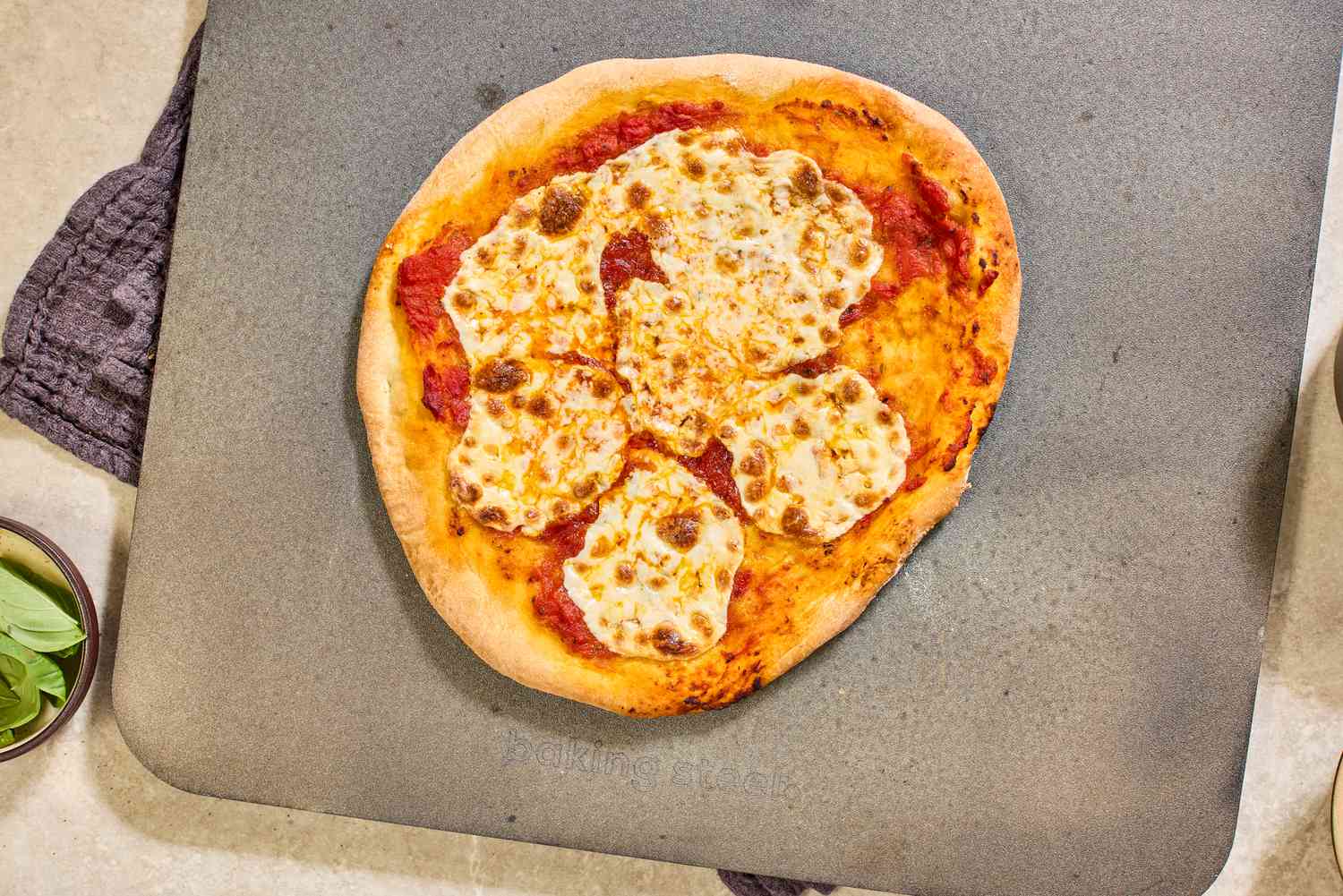
Because steel browns the base faster, it produces a crust that’s shattering-crisp underneath with leopard spotting, sometimes before the top has caught up. In a screaming-hot oven this can tip into scorching if you look away for half a minute. Stone gives a more even, bready chew — the classic pizzeria slice profile — and a wider margin for error.
Thickness and style matter here. Thin New York-style pies love steel. Thick, topped, or slower-baked pizzas — Detroit style, grandma pies, anything loaded with wet vegetables — often do better on stone, where the gentler heat lets moisture escape instead of steaming the base soggy against a superheated surface.
Durability and Care: Where Steel Runs Away With It
This round isn’t close. Stones crack. Thermal shock, one dropped corner, one splash of cold sauce on a blazing surface — and you’re shopping for a replacement. Stones also absorb water and oils, so they demand careful handling: no soaking, no soap, gradual heating only.
A quarter-inch baking steel is close to indestructible. It won’t crack, it doesn’t care about temperature swings, and spills burn off and scrape away. Season it occasionally like cast iron and it will outlive the oven. The trade-offs are weight — a steel for a large oven can run 10 kg or more, so it’s not something you casually move in and out — and cost, since a quality steel usually runs two to three times a comparable stone. Handling matters too: hot steel is less visually obvious than hot stone (both look innocent), so get in the habit of treating every surface as hot until proven otherwise.
Matching the Surface to Your Oven
The oven you own should make this decision for you:
- Wood-fired and high-heat gas ovens (450°C+): Both work. Stone is traditional and forgiving during long sessions; steel rewards attention with faster bakes.
- Standard home ovens (max ~275°C): Steel is the classic hack here. When the air temperature is limited, fast conductive transfer is how you fake a hotter oven, and it’s why steel became famous in home kitchens.
- Countertop electric ovens: Check the manual — many are designed around a fitted stone, and most indoor models — including the countertop designs in the Big Horn pizza ovens collection — ship with the surface their heating elements are tuned for. Swapping surfaces changes bake times, so adjust one variable at a time.
Beyond Pizza: Bread, Roasting, and Everything Else
Most people buy the surface for pizza and then discover it spends half its life doing other jobs. This is where the personalities diverge again. Stone is the traditional hearth surface for bread — its gentle, even release mimics a deck oven, and it wicks a whisper of moisture from the loaf’s base, giving you that crackling, thin crust bakers chase. For sourdough in a Dutch oven it hardly matters, but for free-form loaves baked straight on the surface, stone is the natural pick.
Steel, meanwhile, is a searing machine. A preheated steel under a cast-iron pan isn’t needed, but vegetables, flatbreads, and tortillas cooked directly on it blister beautifully, and it doubles as a plancha for smash burgers on the stovetop. It also reheats leftover pizza better than any other method — two minutes on a hot steel and a day-old slice comes back crisp-bottomed instead of limp. If your “pizza surface” will moonlight as a general-purpose cooking slab, steel’s toughness and indifference to spills make it the easier housemate.
The Honest Verdict
If you bake fast, hot, and often, and you want crisp bottoms with zero babysitting anxiety, buy the steel. If you bake a mix of styles, share the oven with less experienced cooks, or prefer a forgiving chew, stone remains a superb, cheaper choice. Plenty of serious home bakers end up owning both — steel for Friday pizza night, stone for bread and slower bakes.
The better crust doesn’t come from the material. It comes from matching the material to your oven, your style, and your patience. Pick on that basis and you’ll stop arguing about it — mostly.
About the Author